
Fewer vehicles, shorter routes, lower fuel cost with MapWiz
MapWiz is TrackZen's route optimization engine, built to minimize fleet size and fuel consumption through predictive traffic analysis and multi-layered algorithmic refinement. Feed in your pickup points and vehicle capacities — MapWiz returns the smallest fleet that can serve every stop on time.
Route optimization that actually understands traffic
MapWiz is a route optimization engine designed to minimize fleet requirements and fuel consumption through predictive traffic analysis and multi-layered algorithmic refinement — so the route you get is the one that will actually work on the road, not just on a map.
What goes into every optimized route
Pickup Points & Fleet Capacities
The system ingests student (or passenger/cargo) pickup and drop-off coordinates alongside vehicle capacities — typically 22, 36 or 45 seats for school transport, or custom load limits for other fleets.
Traffic-Aware Prediction
MapWiz uses Google traffic data to adjust routes for the specific date and time of travel — distinguishing high-congestion morning peaks from lighter afternoon windows, rather than assuming free-flowing roads.
Realistic Service Limits
Every route respects a maximum student travel duration — typically 60 to 90 minutes — and a standard 30-second service window per stop, so optimized routes stay comfortable and on schedule.
Grouping, Then Refinement
Initial grouping and plotting are followed by a preliminary optimization pass. Final routes are then refined using Google's Navigation and Route Optimization APIs for maximum real-world accuracy.
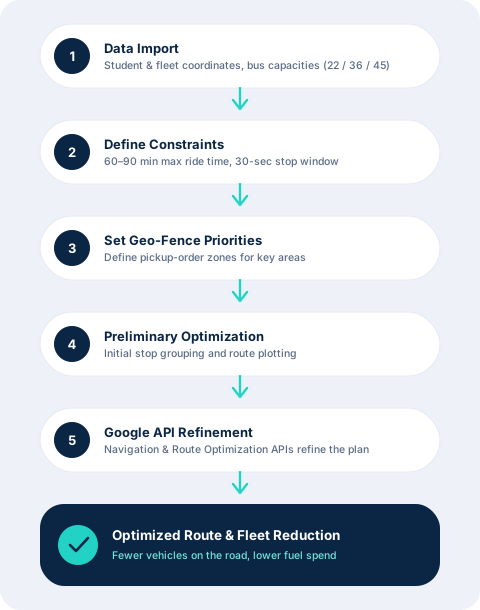
Six stages, from raw data to deployed routes
Every MapWiz route moves through the same pipeline: student and fleet data comes in, constraints and priority zones are defined, an initial route plan is grouped and plotted, and the result is refined against live Google traffic and navigation data before it's handed back to you.
The output is the smallest fleet that can serve every stop within your time and comfort limits — cutting the vehicles, fuel and drivers your operation needs.
A before/after case study: 1,474 students, same coverage, 6 fewer buses
A UAE school transport operator ran its existing student transport program through MapWiz — same students, same home addresses, same school. Only the routing and bus assignment changed. Every figure below was measured directly from the before/after route files.
Before vs. after, route by route
What 561 km a day is worth
Translating the distance saved into fuel cost, at prevailing UAE diesel prices.
Bus counts and distances were measured directly from the operator's route files. Fuel cost and emissions figures are planning estimates based on stated assumptions: AED 3.80/litre diesel, 3.5 km/litre fuel economy for a typical urban stop-start diesel school bus, 180 school days per year, and a round trip assumed to mirror the measured morning run. Actual savings will vary with an operator's own fuel consumption data.
Fewer vehicles is the whole point
The primary driver of MapWiz is reducing the number of active vehicles a district, school or fleet needs. Fewer vehicles means lower fuel costs and lighter operational overhead — a direct answer to rising fuel prices across the UAE market — while also lowering the carbon footprint of every trip. It's a win-win: lower cost, lower emissions, same (or better) service.
Lower Operating Cost
Fewer vehicles and less distance driven translate directly into fuel, maintenance and staffing savings — without cutting coverage or service quality.
Lower Compliance & Safety Risk
Balanced loads replace routes that run at or near the fleet's maximum permitted capacity, reducing the risk that comes with zero-margin vehicles.
Built-In Safety Margin
Every route sits comfortably under capacity instead of at the fleet's absolute limit — with room to spare if ridership shifts.
A Sustainability Story to Tell
Fewer kilometers driven means measurable, reportable emissions reductions that support your own ESG and sustainability commitments.
Built to fit how your fleet actually runs
Capacity Handling
Supports varied fleet sizes out of the box — 22, 36 and 45-seat buses — plus custom capacities for other vehicle types.
Geospatial Priority
Define specific zones via geo-fences to dictate pickup order or priority areas across your service area.
API Integration
Deep reliance on Google's Navigation and Route Optimization APIs for real-time accuracy and predictive modeling.
One engine, many kinds of routes
The case study above happens to be school transport, but the mechanics are universal: match capacity to demand, respect real-world traffic and time constraints, and the smallest fleet that can do the job falls out of the math automatically. Here's what that means in practice across other industries.
Logistics & Distribution
Balancing load across fewer vehicles and tightening delivery windows cuts the kilometers driven on every run — lower fuel and maintenance spend per order, with more capacity to absorb growth before adding trucks.
Delivery Fleets
Minimizing the number of vans needed for last-mile coverage reduces lease, insurance and driver costs fleet-wide, while traffic-aware sequencing keeps on-time delivery rates high even during peak congestion.
Passenger Transportation
Shuttle and staff-transport routes that adapt to real-time traffic avoid wasted idle time and missed pickups — cutting fuel burn while improving the ride for every passenger.
Goods Transportation
Matching load capacity to route demand means fewer part-empty trucks on the road, lowering cost per tonne-kilometer while keeping delivery commitments intact.
Courier Services
High-stop-density routes optimized for sequence and traffic reduce drive time per stop, so couriers complete more deliveries per shift without adding vehicles or overtime hours.
...and more
Any operation balancing stops, capacity and time windows can apply the same engine to cut vehicles, fuel and operating cost.